





































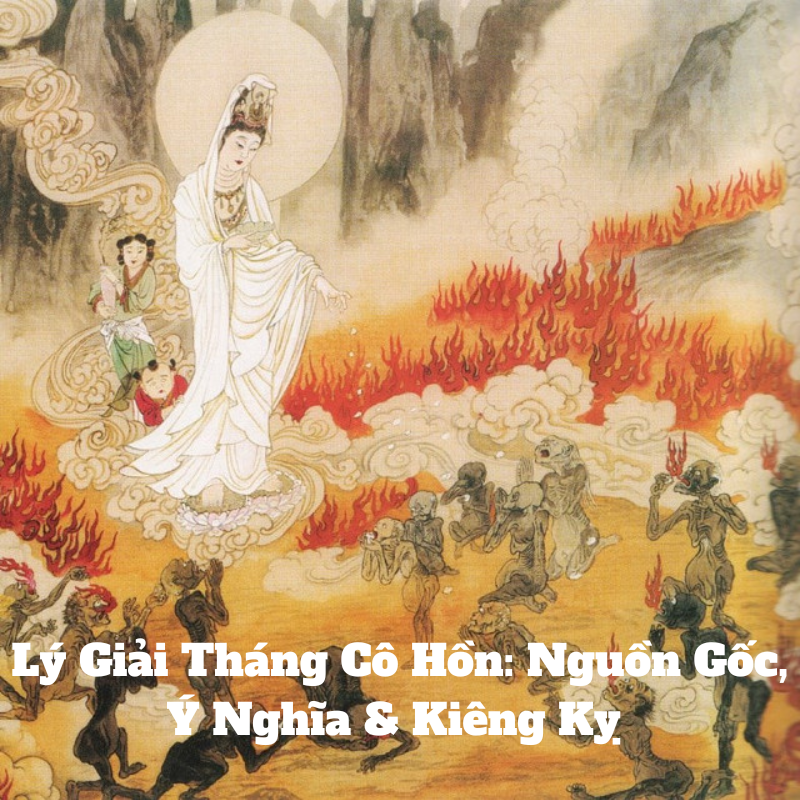
Every year around the full moon of the seventh lunar month, called Rằm tháng 7 in Vietnam, many families make offerings and pray to the Buddha, hoping to keep misfortune away and to ask for luck and peace. The month as a whole is popularly known as tháng cô hồn, the “month of wandering souls” or ghost month. This article explains where the idea comes from, what it means, and what people traditionally avoid during these weeks.
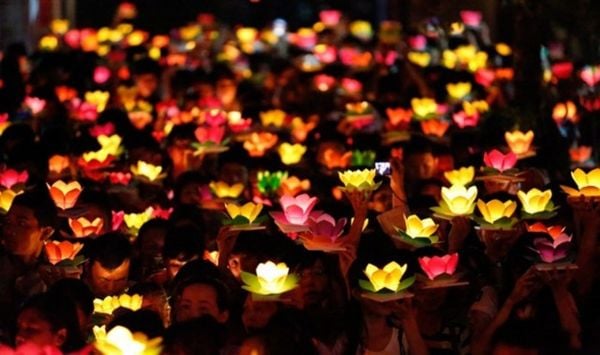
Why is the seventh lunar month called the ghost month?
When is the ghost month?
The ghost month is the seventh month of the lunar calendar: it begins on the 1st day of that month and lasts until the month ends (the 29th or 30th, depending on the year). On the Western calendar the dates move from year to year; in 2026 the month runs from 13 August to 10 September, and the full moon falls on 27 August.
Origin and meaning of the ghost month
Why is the seventh lunar month the month of wandering souls? Here is the story behind it, and what the month means to Vietnamese families.
Where the ghost month comes from
According to folk belief, the seventh lunar month is called the ghost month because, from the 2nd to the 14th day, Diêm Vương (the King of Hell) opens the gates and lets spirits return to the world of the living to visit the places they once knew. For this reason many people avoid doing anything important during the month.
The custom of making offerings to wandering souls, called cúng cô hồn, is said to have come from China. It is linked to a Buddhist story about Ananda (A Nan in Vietnamese), who was told by a demon that he would die within three days. A demon also showed him how to escape that fate. Ananda then told the Buddha what had happened, and the Buddha gave him a prayer to recite when making the offerings the demon had asked for.
What the full moon of the seventh month means
The 15th day of the seventh lunar month is when families honour those who have died. They offer rice and rice wine, and they burn vàng mã (votive paper money and paper goods) as an act of merit for the spirits believed to be visiting. The ceremony is symbolic: it expresses the wish that the souls of the ancestors, and wandering ghosts as well, find a place of peace and are treated with respect.
The ghost month is therefore understood as a time to remember one’s ancestors and to give thanks to the wandering souls who, it is believed, carry bad luck away from the family. This mixture of spiritual belief, tradition and superstition has made the month a meaningful observance in the culture of many Asian countries.
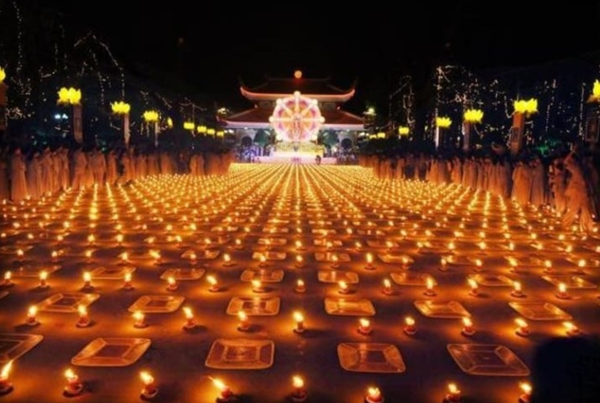
The origin and meaning of the ghost month, the seventh lunar month
What people avoid in the ghost month and at the full moon of the seventh month
Folk tradition lists a number of things to avoid during the ghost month, in the hope of staying clear of bad luck:
Going out late at night
Burning paper offerings carelessly
Plucking, waxing or shaving leg hair
Hanging clothes out to dry after dark
Sneaking a taste of food that has been set out as an offering
Picking up small change found on the ground
Hanging wind chimes at the head of the bed
Calling one another by name at night
Frightening other people for fun
Playing with reflections
Looking in a mirror at night
Standing chopsticks upright in a bowl of rice
Buying a new car or motorbike
Going to, or standing near, the corner of a wall
Taking photographs in a mirror
Leaving the toes of your slippers pointing towards the bed when you sleep
Having a haircut
Offering meat or fish dishes during the month of the full-moon rites
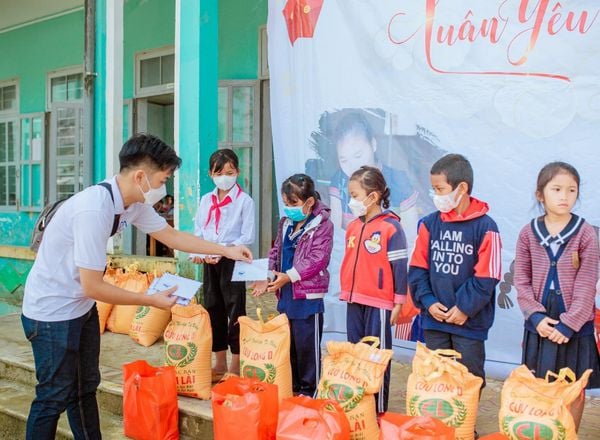
Charity and kindness to the people around you are among the nine things to do in the ghost month
What people buy and do in the ghost month to keep bad luck away
According to folk belief, these are the things to buy and the things to do during the ghost month in order to avoid misfortune and invite good luck.
Three things people buy in the ghost month
Salt: salt is believed to drive away evil spirits, and it is also used to kill germs. Many people buy salt this month in the hope of chasing bad luck away.
Candles: used in the ceremonies for Heaven and the Buddha, the deities, the ancestors and all wandering souls, as a sign of sincere respect.
Agarwood incense: lit at the altar and offered to the wandering souls of the seventh month, in the hope that they will bless the family with good fortune.
Nine things to do in the ghost month
Pay respects to the deities and the ancestors every day, before leaving the house and after coming home.
Keep the house clean and airy, and open the doors so that sunlight and fresh air can move through it.
Do good deeds: give to those in need, make offerings at the pagoda, release captive animals.
Keep a calm mind, and forgive the irritations of daily life.
Read or chant the sutras, or recite a mantra, each day to keep one’s faith in the Buddha steady.
Teach children to respect and love older people and to protect those who are weaker.
Make time to care for parents, grandparents and the people around you.
Take part in charity and volunteer work to help people in difficulty.
Learn about traditional cultural and spiritual principles and follow them, respecting Vietnamese customs.
How the full-moon offerings of the seventh month are made
By tradition, the offerings for the full moon of the seventh month can be made on any day from the 2nd of the month until before noon on the 15th. The 13th is often regarded as the best day: it is described as an auspicious day, good for praying for prosperity and for setting out on a journey, and many people think of it as a lucky one.
Each kind of offering has its usual time of day:
Offering to the Buddha: usually made in the morning.
Offering to the ancestors: usually made around midday, between 10 am and 12 noon.
Offering to wandering souls: usually made in the early evening, between 5 pm and 7 pm.
Each ceremony has its own tray of offerings and its own decorations. For the Buddha, the altar is usually dressed with fresh, fragrant flowers, incense, lamps, tea, fruit, sticky rice, sweet soup and a few prepared vegetarian dishes.
The tray for the ancestors usually includes tea, rice wine, fruit, sticky rice with mung beans, bánh chưng (square cakes of sticky rice) and a glass-noodle soup with pork balls. For the wandering souls, the tray usually holds plain rice porridge, cakes, sweets, incense, candles, fruit, small banknotes and white salt.
These rites and prayers show respect and gratitude towards the ancestors and towards the unseen dead, and they also help keep Vietnamese traditions alive.
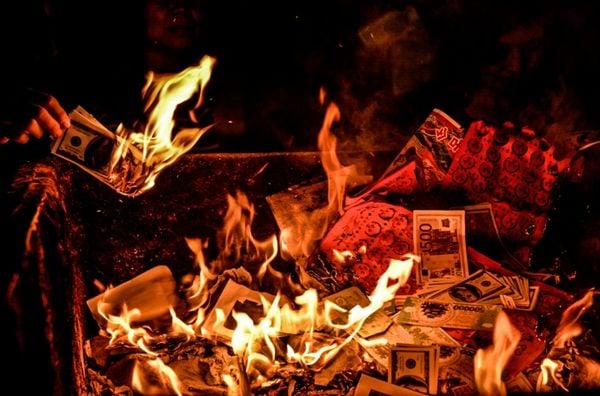
How the offerings for the full moon of the seventh lunar month are made
Good-luck wishes to send during the seventh month
Nothing elaborate or showy is needed. A sincere wish for the start of the month, like the ones below, is enough to pass on some cheer and good luck as the ghost month and its full moon approach. Several of them mention mùng 1, the first day of the lunar month:
Chúc anh/chị mùng 1 đầu tháng gặp nhiều may mắn, tài lộc nhé! Wishing you plenty of luck and prosperity on the first day of the month! (Said to someone a little older than you.)
Chúc mọi người tháng mới dồi dào sức khỏe, tiền tài phát triển, gặp nhiều điềm lành. Wishing everyone good health, growing wealth and many good omens in the new month.
Mùng 1 đầu tháng suôn sẻ và hanh thông nhé!. May the first day of the month go smoothly and well!
Chúc mọi người tháng mới bình an, điềm rủi tránh xa điềm may mãi đến. Wishing everyone a peaceful new month; may bad omens stay away and good ones keep coming.
Chúc bạn tháng 7 có được nhiều tình yêu thương từ mọi người xung quanh.. May the seventh month bring you much love from the people around you.
Chúc anh sáng mùng 1 gặp nhiều may mắn, cả tháng mọi việc suôn sẻ, như ý ạ. Wishing you a lucky first morning of the month, and a whole month in which everything goes smoothly and as you hope. (A polite form, said to an older man.)
Mùng 1 vui vẻ, cả tháng cát lợi nha. Have a happy first of the month, and a fortunate month ahead.
The ghost month is not only a time for offerings and for remembering the dead; it is also a chance to understand Vietnamese spiritual culture more deeply. Respecting and understanding traditions like these can help build a society with more kindness and empathy. The month invites people to hold on to what is good in tradition, and to keep a hopeful belief in a life that is safe, happy and at peace.