




















What should you do when you come home from a funeral? In Vietnam it is a common question. By long-standing folk belief, a small cleansing ritual called đốt vía (roughly, “burning away bad spirits”) is performed after paying your respects at a funeral, to clear away negative energy and any bad luck thought to follow a person home. Some people also give the custom a practical reading, as a matter of hygiene and health. In this article Flosa explains what the custom means, how it is done step by step, and what else many families do to look after themselves after a funeral, setting the traditional view and the practical one side by side.
Why cleanse after a funeral? The spiritual meaning and the practical explanation
People who keep the custom do not see it as mere superstition. They explain it in two ways.
In folk and spiritual belief
In Vietnamese culture, funerals, funeral homes and cemeteries are often thought of as places heavy with âm khí, the “yin” energy associated with the dead, or with negative energy in general. Many people believe that a living person who visits such a place can pick up a “cold spirit” (vía lạnh) or an “ill air” that clings to them.
The cleansing ritual is regarded as a way to drive off whatever is thought to cling to the body, to bring mind and body back into balance, and to give peace of mind. It is also believed to keep ghosts or a “fierce spirit” from following a person, and so to avoid misfortune.
Some people say they feel cold, sluggish or tired after a funeral, or even that they run into bad luck, and the ritual is seen as the remedy for these effects. The condition is sometimes called phong long, a folk term for bad or unlucky influences put down to this kind of negative energy.
See also: how to choose funeral flowers by colour, flower and style
The practical explanation given today
Some people also give a practical explanation for what is done after a funeral, the cleansing ritual included, in terms of hygiene and health:
Germs: A place where someone has died, it is said, may harbour more bacteria and other germs than usual, particularly as time passes.
People in fragile health: The elderly, small children and people who are already ill have weaker defences. The concern is that after such a visit they may fall ill more easily, or that an existing illness may return or get worse.
Fire and aromatic oils: The heat of the flame and the natural oils released by the things burnt (pomelo peel, bồ kết pods, lemongrass, lime leaves) are thought to disinfect and freshen the air around the person.
The “cold air”: The “cold” that folk belief speaks of may simply reflect the fact that the body of the deceased loses its warmth, and that the surroundings are often cooler and damper than usual.
Seen this way, the ritual has a spiritual meaning and is also treated by many as a sensible precaution.
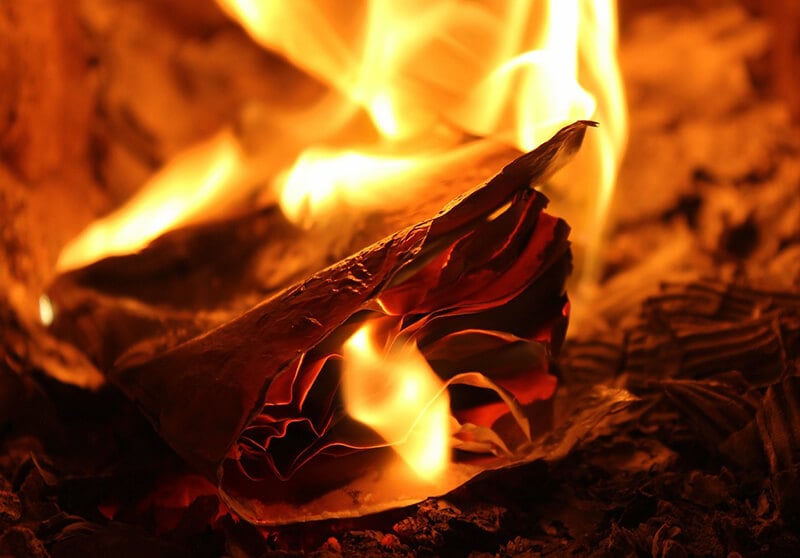
The meaning of the cleansing ritual after a funeral, in folk belief and in the practical view
See funeral wreaths from Flosa:
See the funeral wreath collection
How the cleansing is done after a funeral: a detailed, safe guide
This is how the ritual is customarily prepared and carried out.
What to prepare
Something to make a fire: charcoal or old newspaper, enough for a small fire. Charcoal burns longer and gives a steadier smoke.
Things that give fragrance and are thought to disinfect:
Dried pomelo peel: very widely used, with a pleasant scent and aromatic oils.
Dried bồ kết pods (the pods of a honey locust tree): their smoke is used to drive away insects and freshen the air, and is traditionally believed to ward off evil.
Aromatic leaves: lime leaves, lemongrass, ngũ vị leaves, ming aralia leaves, guava leaves, perilla and so on. All contain natural oils and give off a fragrance when burnt.
White salt (optional): some people add a pinch of salt to the fire, in the belief that salt drives away evil spirits and bad luck.
Performing the ritual
Choose the place: The ritual is usually done outside the front door (in the yard or on the porch) or in a corner of the garden, as soon as you return from the funeral and before you step inside the house.
Light the fire: Burn the charcoal or paper into a small fire, no bigger than needed. Wait until it is burning steadily before adding anything else.
Add the other materials: Slowly put in the pomelo peel, the pods and the aromatic leaves, and let the smoke and scent spread.
Warm yourself: Carefully warm the palms of your hands and the soles of your feet near the fire. The heat warms the body and is said to chase away the “cold air” and the feeling of damp.
Step or hop over the fire: In the traditional view this is an important part of the ritual: men step over seven times; women step over nine times. While doing so, some people quietly repeat the words Vía dữ thì đi, vía lành thì ở lại (“Let the bad spirit go, let the good spirit stay”), or something similar.
Herbal steam (instead of, or as well as, the fire): You can also boil a large pot of water with aromatic leaves (lemongrass, pomelo, lime, perilla, Vietnamese balm and the like) and steam your whole body over it. The warm, scented steam is felt to cleanse the body, relax the mind and clear away the âm khí.
Important safety notes:
Mind the risk of fire: light it in an open, airy place, well away from anything that catches fire easily.
Do not build a big fire. A small one is enough.
When you have finished, make sure the fire is completely out.
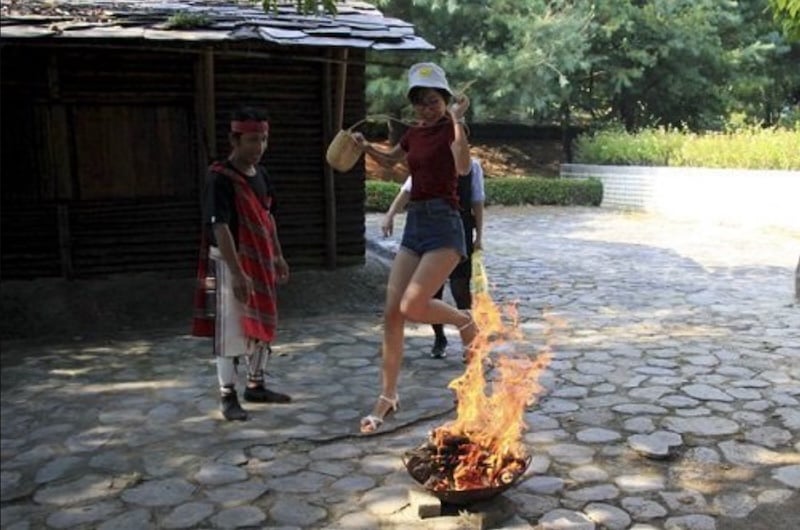
How to carry out the cleansing ritual safely and properly after a funeral
Does it matter if you forget the cleansing after a funeral?
According to folk belief, and to what many people say from their own experience, someone who forgets the ritual may feel tired and sluggish, catch a chill, or meet with small mishaps, which are put down to the âm khí or “cold spirit” still clinging to them. Families take the matter more seriously for people in fragile health.
What if you did forget?
There is no need to worry. If you are already indoors when you remember, people commonly use one of these other ways to clean and warm the body:
Garlic: Crush a few cloves, mix them with a little warm water and rub the liquid on your palms and soles, or simply carry a few cloves with you.
Medicated oil, or cajeput or lemongrass oil: Rub dầu gió (the menthol-based medicated oil found in every Vietnamese household) or another warming oil on your temples, neck, chest, palms and soles.
A ginger or herbal bath: Wash promptly in warm water with crushed ginger, or in water boiled with the aromatic leaves mentioned above.
All the same, the custom is to do the cleansing as soon as you reach your own front door.
See also: dignified wreaths for a Catholic funeral
What else to do after a funeral, for your health and peace of mind
Besides the cleansing ritual, there are a few other things people are advised to do as soon as they return from a funeral.
Wash and change into clean clothes straight away
This is considered one of the most important things to do after a funeral. The clothes you wore are believed to have absorbed the air of death and negative energy, or, in the practical view, to carry germs from the funeral.
Bathe in warm water: it warms the body and washes away dust and dirt.
Bathe or steam with aromatic leaves: as mentioned, you can boil water with lemongrass, ming aralia, guava or lime leaves, perilla, cinnamon bark or pomelo peel. People find it refreshing and relaxing, and it is said to drive off the “cold air”.
The clothes you wore: once you have changed, wash them straight away. If you cannot, leave them outside the house (on the balcony or in the yard) rather than bringing them indoors.
Rub on medicated oil, an essential oil or ginger wine
After bathing, you can rub a little medicated oil, cajeput or lemongrass oil, or ginger steeped in rice wine on your skin, especially the temples, neck, chest, palms and soles. It warms the body, and in folk belief it also keeps evil spirits away.
Drink something warm
A glass of warm water as soon as you get home warms the body from the inside and is said to get rid of the “cold air” and strengthen your resistance. Popular choices are:
- Warm ginger water: ginger is regarded as a “warming” food that eases a chill and settles the stomach.
- Warm garlic water: garlic is valued as a traditional germ-fighter.
- Warm lime water with honey: a source of vitamin C.
- Oleaster leaf water (if you have it): a traditional folk remedy.
Rest properly
Attending a funeral is emotional and sometimes exhausting. Give your body time to recover. Avoid heavy work or stressful activities immediately afterwards, and get a good night’s sleep.
Keep away from people in fragile health for a while
This is one of the most widely observed taboos after a funeral. Do not call at anyone else’s home on the way back, least of all a household with elderly people, small children, a pregnant woman or someone who is ill. Go straight home and wash first. In the practical view, this avoids passing on any germs you may have picked up. Should a family with a small child go to a funeral? The usual advice is not to take small children. If it cannot be avoided, families cleanse both mother and child carefully afterwards and do not keep the child at the funeral for long.
See also: sympathy flowers for a funeral
Look after your feelings
A funeral is a sad occasion and can leave you grieving, with a sense of loss, or under strain. Take time to care for yourself. Talk to family or friends, or turn to something that relaxes you, such as music, reading or meditation.
See condolence flower baskets from Flosa:
See the condolence basket collection
Things people carry to a funeral to ward off the “cold air”
What do people take with them to a funeral to protect themselves? These are the traditional items:
Garlic: Fresh garlic has a reputation for repelling ill airs. A few cloves in a shirt or trouser pocket are believed to protect your health, block the influence of the âm khí and keep ghosts from following you.
Betel leaves or custard-apple leaves: In folk belief both keep the stomach warm and stop the body catching a chill in the heavy atmosphere of a funeral. People crush a few leaves and keep them in a pocket.
Medicated oil or an essential oil (cajeput, lemongrass): Medicated oil warms you when you feel cold, and is also believed to keep evil spirits away. It is a common and convenient choice. Dab a little on your temples, under your nose or on your wrists before you go in.
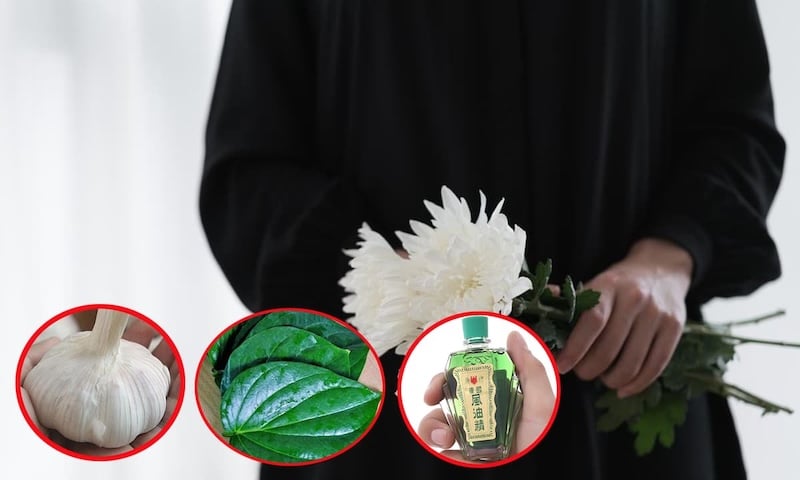
Things people carry to a funeral to ward off the cold air and ill influences
11 taboos to keep in mind when you attend a funeral
You pay your respects at a funeral to share the family’s grief and to honour the person who has died. Alongside the things you should do, there are 11 taboos that visitors are expected to observe, out of respect and, in folk belief, to keep misfortune away:
Do not wear loud or revealing clothes: choose sober colours (black, white, grey) and modest, neat clothing.
Do not talk loudly, laugh or tease one another: keep a solemn, respectful manner.
Do not pass comment on, or gossip about, the deceased or the family: this is the gravest breach of all, a plain lack of respect.
Do not let children go too close to the coffin, or cry loudly: children are sensitive and easily affected by the mournful atmosphere.
People who are seriously ill or frail, and pregnant women, are advised to limit or avoid going to funerals: the illnesses people have in mind are mainly infectious diseases and serious chronic conditions. For a pregnant woman, the customary advice is not to go at all. If she does, someone stays close to shield her, she carries garlic and medicated oil, and she cleanses carefully at home afterwards.
Do not bring valuables or wear elaborate jewellery: they may get lost, and they do not suit the occasion.
Do not film or take photographs as you please, above all of the body.
When paying your respects, do not stare at the portrait or the coffin for long.
Avoid eating and drinking at the funeral unless it is really necessary or you are invited to: some people believe that doing so is unlucky.
Do not call at anyone else’s home straight after the funeral: go directly home and cleanse first.
People whose birth year is thought to clash with the occasion, or who are held in folk belief to have a “heavy spirit” (some cases among the four zodiac signs said to avoid funerals, the Tiger, Monkey, Snake and Pig, depending on the day and hour), are advised to think it over or ask an older relative before going. Should someone with a tumour go to a funeral? The common view is that a person with a benign tumour who is otherwise well may consider going, while someone with a malignant tumour, or who is in treatment and has little resistance, is better staying away.
What if there is a funeral near your home? People who live close to a house in mourning often shut the windows facing it, burn bồ kết pods or diffuse essential oils to freshen the air indoors, and keep small children and the elderly inside during the busiest moments of the funeral.
See also: what to write on a funeral wreath ribbon, and suitable wording for a funeral flower stand
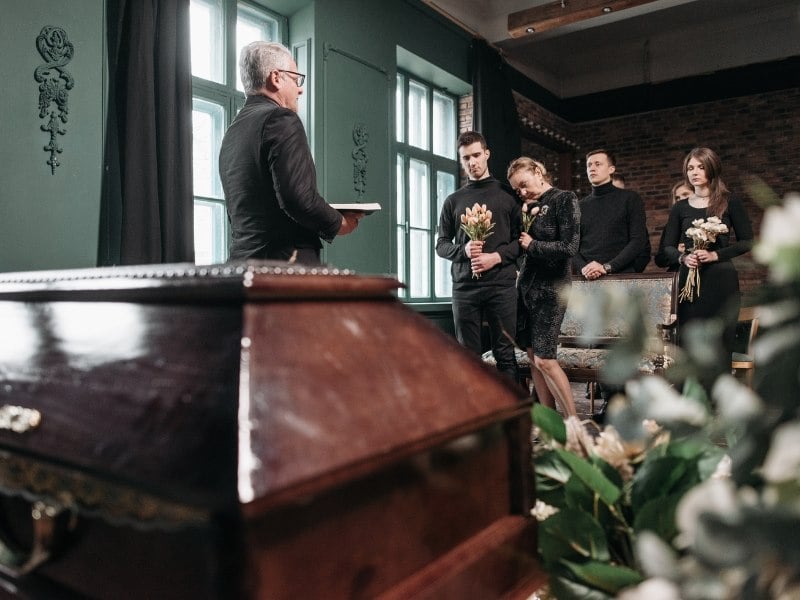
Taboos to observe when attending a funeral, as a mark of respect
Four zodiac signs that folk belief says should avoid funerals
In traditional feng shui and horoscope lore, some of the twelve zodiac animals are said to “clash” with the atmosphere of a funeral, or to be more easily affected by negative energy there than others, especially on certain days and at certain hours. There is no scientific basis for this, but it is a spiritual consideration that many people take seriously:
The Tiger: People born in the year of the Tiger are said to have strong characters and plenty of “yang” energy. In some cases and at particular moments of a funeral (a clashing day or hour, for example), their presence is thought to cause a “conflict” of energies that is good neither for them nor for the ceremony.
The Monkey: Like the Tiger, people born in the year of the Monkey are said to have certain times when they should stay away from places heavy with âm khí, such as funerals, for the sake of their fortune and health.
The Snake: People born in the year of the Snake are sometimes said to be sensitive to spiritual energies. It is believed that a funeral may leave them tired or uneasy, or that things may go less smoothly for them afterwards.
The Pig: Some horoscope books likewise advise people born in the year of the Pig to be careful about going to places in mourning, particularly if they feel unwell or unsettled.
Important notes:
The idea of four zodiac signs that should avoid funerals is for reference only. It depends a great deal on personal belief, and on other details such as the day and hour of the funeral and the age of the deceased.
If you belong to one of these signs but were close to the deceased and the family, you can still go to show your feelings. People who share the belief simply take extra care: they carry garlic, betel leaves and medicated oil, and cleanse thoroughly when they get home.
If it really worries you, ask an experienced older member of the family, or a feng shui practitioner.
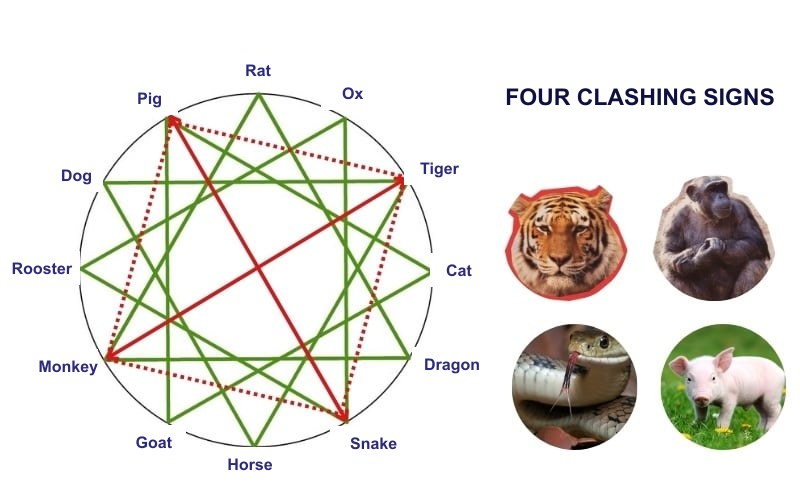
Four zodiac signs that folk belief says should take care about attending funerals
The cleansing ritual after a funeral, washing thoroughly, drinking something warm and observing the taboos bring together folk wisdom handed down through many generations and ordinary good hygiene. Whether you hold the spiritual belief or simply see these as sensible precautions, Vietnamese people sum up the attitude in a proverb: Có thờ có thiêng, có kiêng có lành (“Worship and it will be sacred; abstain and you will be safe”).
See sympathy flowers from Flosa:
See the sympathy flower collection
Order at: Flosa.vn
Flosa hopes this guide helps you and the people you love to feel well and at ease after attending a funeral, and to show your respect in full while looking after yourselves.